Twelve items still unlisted, and the inbox is already at forty
Last month at a client’s site, Lao Zhou finished that day’s listings at two in the afternoon. The phone already held forty-odd messages. Half asked “still there?”, and the other half asked “can you go a bit lower?”
He sells outdoor gear, second-hand and leftover stock, on Facebook Marketplace. He holds twenty-odd accounts, and Facebook marketing is the main business. Every morning he spends two hours listing twelve or thirteen items. Title, description, price, condition, and pickup method all have to be filled in, and each item needs three photos picked.
Halfway through the listing, yesterday’s buyer asks a question. Answer the message and today’s listing stops. Keep listing and the buyer will not wait.
Listing the goods is manageable. What he dreads is going back at night to clean up: which item sold, which listing expired, which negotiation should come down first. That is the grinding part of second-hand ecommerce.
Apple cluster control is one computer managing many iPhones. Screens are watched together, tasks go out by group, and results come back together. It does not require jailbreak. Mainstream setups drive the devices with external input.
A page post is about reach and engagement, and after it goes out you mostly do not have to keep staring at it. Marketplace is a shelf. As soon as an item is live, people ask. Listing and replies have to run at the same time. Slow by an hour or two and the buyer may already have found someone else.
Split bulk listing into two stages. The night before, prepare the materials: product name, description, price, condition, pickup location, and three photos, into a list. The next morning is upload only. The assets are on the computer, so you are not hunting through the phone.
Do not list the same batch on twenty-odd accounts either. Inside one city, one account is usually enough. Across regions, group by area. Each account lists only the goods for its own area.
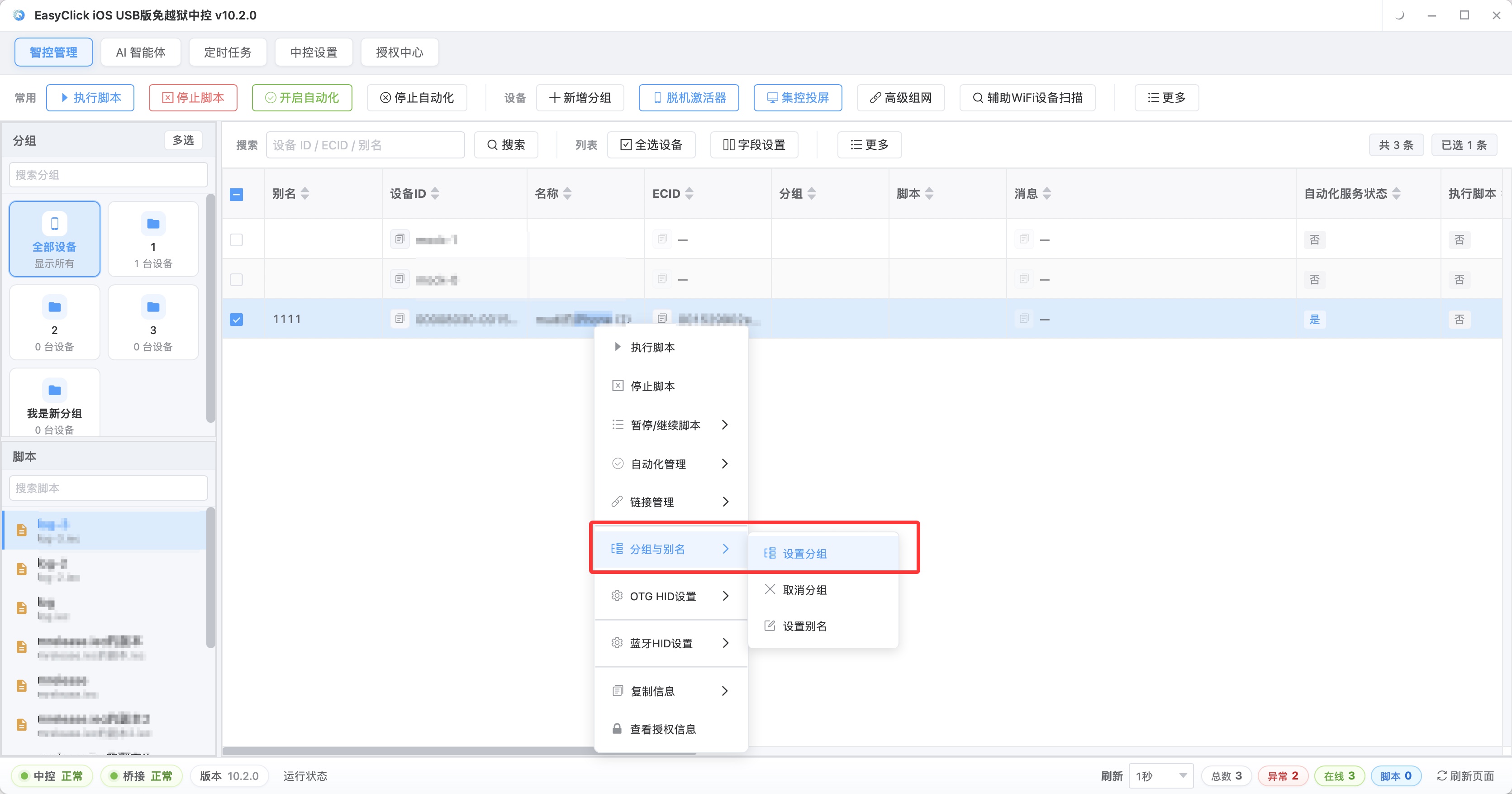
After grouping, a task becomes “send this batch of goods to this group”. When a group stalls, you can see it on the screen.
Try two or three accounts first. The first time, Lao Zhou went straight to twenty accounts, and one pickup location was wrong. All twenty listings landed in the next city over. Run a small batch correctly, then scale up. Skip that step and fixing mistakes is slower than listing.
Sixty percent of enquiries can be fixed replies. Forty percent need a person
Lao Zhou counted the messages. More than sixty percent sit in three lines: still there, can you go lower, can you ship it.
“Still there?” only needs in stock or sold. “Can you ship it?” gets the shipping fee, or a note that pickup is the only option. The facts are fixed, so a machine can give a standard answer from the item’s status. A person gets tired of the same reply twenty times. A script does not.
Bargaining, follow-up detail, and setting a time are different. That forty percent has to go to a person. Support sits at the computer, watches the message list, picks a ready reply for the fixed questions, and takes the price talks themselves.
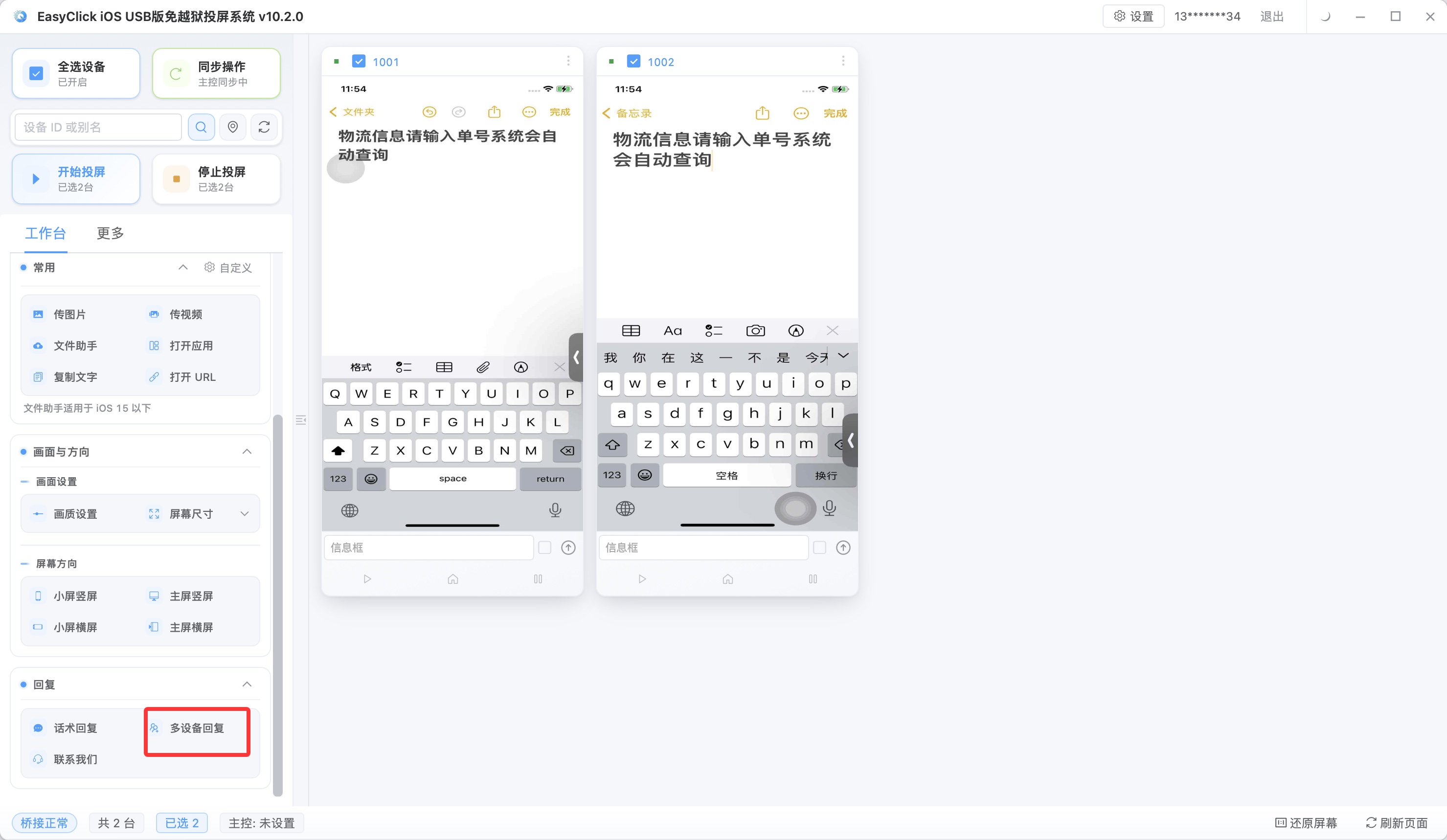
Replies are only half the job. Leave a sold item unmarked as sold and people ask again the next day. Leave an expired listing unposted and the earlier listing was wasted.
Lao Zhou puts the sweep at 10 p.m. every day. Three things only: mark sold items, relist expired ones, and take down ones where terms are already agreed. The third is the easiest to forget.
An item that is already agreed, and still sitting on the page, keeps receiving enquiries. Every new message needs another explanation. Take it down first, handle it after the sale closes, and you answer a lot less noise.
Fixed replies have a boundary too. Do not chase customers with a template. If they do not reply, they are usually not interested. Bargaining, complaints, and after-sales all go to a person. Those need judgment.
Do not relist the same batch at high frequency either. If it will not sell, take it down, reshoot the photos, and rewrite a real description. Publishing the same thing in place over and over looks like flooding the feed. Write condition, flaws, and pickup limits clearly. One return can eat the labor you just saved.
Daily work goes in a script. The quarterly count goes to iEasyRun
Listing, enquiries, and the evening sweep happen every day, and the steps are fixed. That kind of task fits an iOS automation script.
A quarterly clearance count is different. Lao Zhou has to export in-stock items from twenty-odd accounts and check them against the warehouse. It happens once a quarter, and the flow still changes. Writing a dedicated script for it does not pay.
He hands that work to iEasyRun. From central control 10.6.0 (2026-09-02), the AI agent was renamed iEasyRun, and the product site is https://ieasyrun.com . Describe the task in plain language and it watches the phone screen and carries it out. Ad-hoc price checks and one-off cleanups can be done the same way.
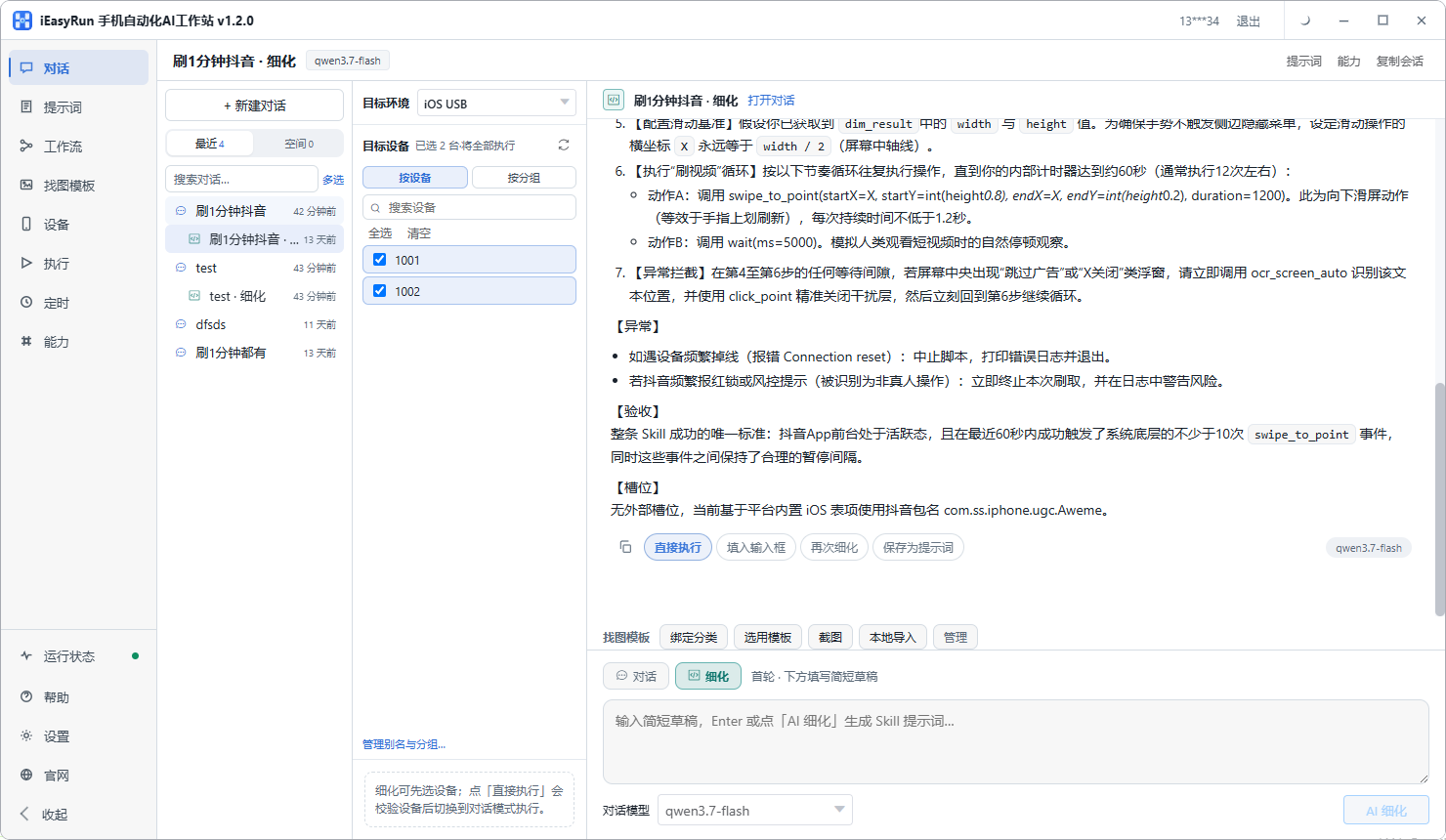
The split is clear now. Daily listing, fixed enquiry replies, and the evening sweep go through iOS cluster control. The quarterly count and ad-hoc price checks go to iEasyRun. The two tools can run on the same phone, and they do not conflict.
At night Lao Zhou looks at the sweep result once. Mark the sold items, relist the expired ones, and confirm the next day’s assets. That is twenty minutes now. It used to be ninety.
He spends the saved time splitting regions again. One account used to list goods for the whole city, and buyers only found out after asking that pickup was a three-hour drive. A script cannot decide how to draw the regions for him. After the groups exist, it keeps the repeated actions from filling the day.
For the overall approach to multi-account operations, see how to schedule a multi-platform matrix in one place. For putting device screens on one display, see iOS screen mirroring without jailbreak.
About EasyClick: A mobile automation script development platform covering three phone ecosystems: Android without root, iOS without jailbreak, and HarmonyOS. It also offers Apple script writing, Apple cluster control, Android cluster control, remote cloud control, and AI phone cluster control. → Explore all products
Ready to build it for real?
Every approach in this article can be built with EasyClick capabilities on iEasyClick — full documentation, developer tools and automation products, free to try.